Landscaping Tips
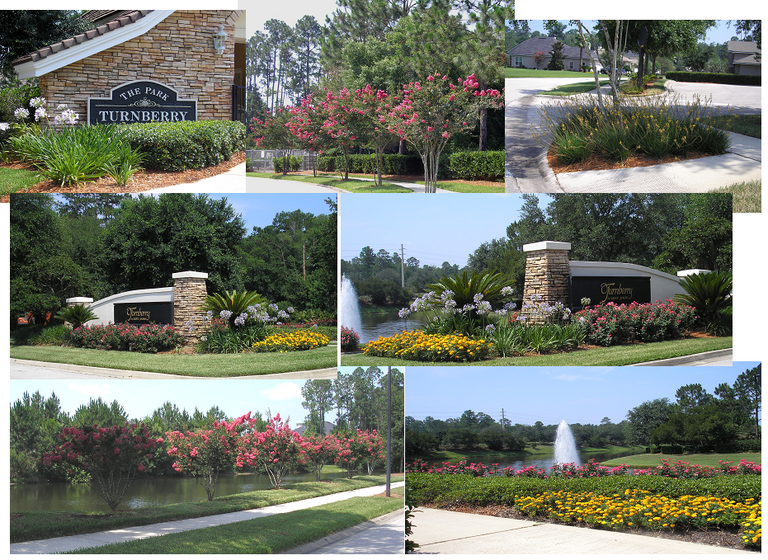
The Turnberry Landscape Committee meets periodically to inspect the condition of the common area landscaping, and recommends to the Turnberry Board on landscape enhancements. Members of the Landscape Committee are: Mary Ann Bell, Michelle Petrarca (liaison to the HOA board), David Neves, Louis Petrarca, and Cheri Serbin.
Questions about what is being done? Landscaping ideas for the common areas? Please share them with us!
Best contact is Michelle Petrarca at michellepetrarca@yahoo.com.
10 Ways to be "Florida Friendly"
(adapted from the April 2010 Horticultural News, University of Florida IFAS Extension publication)
Use a rain gauge. Lawns need 1" water per week in warm months and ½" in the cool season.
Do not set your sprinkler system on automatic unless you will be away. Water only as needed.
Check your irrigation system rain cut-off controller. The cork inside dries out and usually needs to be replaced yearly.
Use only slow release fertilizers. Check labels for less than 15% slow release nitrogen.
Put out a bird, bat or toad house. Provide a source of fresh water for wildlife.
Use only by-product mulches like pine bark, pine straw, malaleuca, tree trimmings or leaves. Stay away from cypress which is produced by total tree destruction.
Do not treat areas within 10 feet of a pond with fertilizer or pesticide.
Keep hard surfaces like driveways and walks clear of leaves, fertilizers and any liquid spills. They funnel to storm drains and then to larger water bodies.
Mow your lawn high. Too short means shallow roots and results in greater water need.
Use the least toxic and, if available, environmentally friendly methods to treat pest problems like plant diseases, caterpillars and grasshoppers.
Questions about what is being done? Landscaping ideas for the common areas? Please share them with us!
Best contact is Michelle Petrarca at michellepetrarca@yahoo.com.
WATERING GUIDELINES
The following St John's River Water Management District irrigation rules apply whether you use county water or have your own well:
Houses ending in odd numbers water on Saturdays.
Houses ending in odd numbers water on Saturdays.
Houses ending in even numbers water on Sundays.
Watering permitted only before 10AM or after 4 PM
New plantings may be hose watered until established.
Please help conserve our drinking water supply, lakes, and ponds.
Thank you for helping.
Watering permitted only before 10AM or after 4 PM
New plantings may be hose watered until established.
Please help conserve our drinking water supply, lakes, and ponds.
Thank you for helping.
County Ordinance to Protect our Waterways
The St. Johns County Commission has passed an ordinance designed to reduce runoff into our waterways. Provisions include:
Homeowners are encouraged to not leave cut or mowed material within 10 feet of any surface water.
Fertilizer misapplied or spilled on an impervious surface must be removed or transferred to turf.
No fertilizer, grass cuttings or other vegetative debris may be conveyed to storm drains or bodies of water.
“Florida Friendly” fertilizers should be used.
The St. Johns County Commission has passed an ordinance designed to reduce runoff into our waterways. Provisions include:
Homeowners are encouraged to not leave cut or mowed material within 10 feet of any surface water.
Fertilizer misapplied or spilled on an impervious surface must be removed or transferred to turf.
No fertilizer, grass cuttings or other vegetative debris may be conveyed to storm drains or bodies of water.
“Florida Friendly” fertilizers should be used.
10 Ways to be "Florida Friendly"
(adapted from the April 2010 Horticultural News, University of Florida IFAS Extension publication)
Use a rain gauge. Lawns need 1" water per week in warm months and ½" in the cool season.
Do not set your sprinkler system on automatic unless you will be away. Water only as needed.
Check your irrigation system rain cut-off controller. The cork inside dries out and usually needs to be replaced yearly.
Use only slow release fertilizers. Check labels for less than 15% slow release nitrogen.
Put out a bird, bat or toad house. Provide a source of fresh water for wildlife.
Use only by-product mulches like pine bark, pine straw, malaleuca, tree trimmings or leaves. Stay away from cypress which is produced by total tree destruction.
Do not treat areas within 10 feet of a pond with fertilizer or pesticide.
Keep hard surfaces like driveways and walks clear of leaves, fertilizers and any liquid spills. They funnel to storm drains and then to larger water bodies.
Mow your lawn high. Too short means shallow roots and results in greater water need.
Use the least toxic and, if available, environmentally friendly methods to treat pest problems like plant diseases, caterpillars and grasshoppers.